
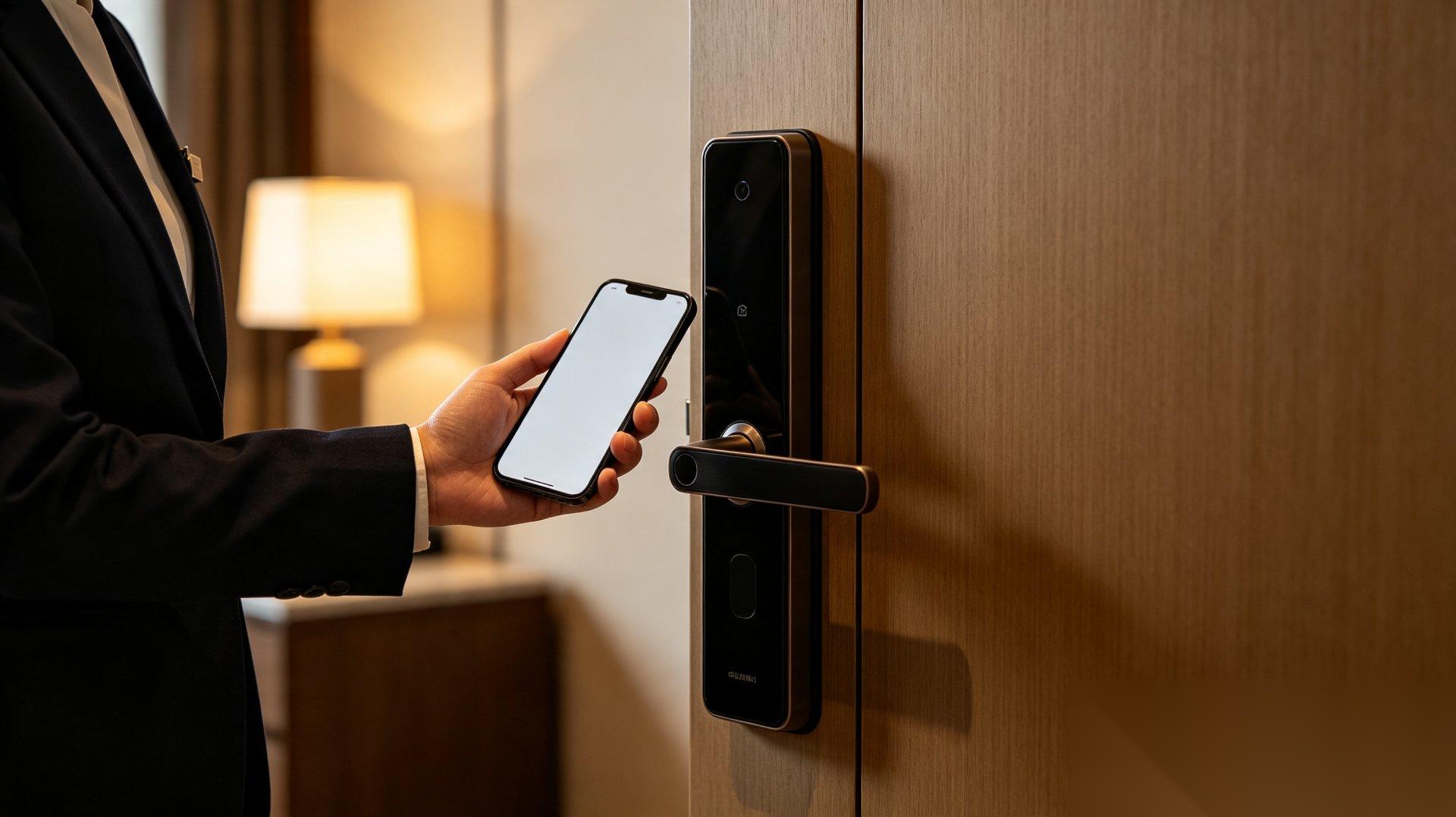
From centralized front desk to unmanned operation
Traditional hotels and long-stay apartments rely on front-desk card issuance and manual registration, with high night-shift and handover costs and untraceable lost or lent keys. The hotels and rentals solution uses smart locks as the entry point, moving check-in, authorization and check-out online so the front desk shifts from a card desk to a service desk.
Core capabilities
Smart room locks. Multi-modal unlock via Bluetooth, QR code, PIN, IC card and fingerprint, with order-based time-limited permissions that auto-expire on checkout to prevent overstays.
Self-service check-in. Guests complete identity verification and room selection via mini-program or kiosk; the system auto-issues access, no queue at the front desk, improving first-night experience.
Staff efficiency tracking. Cleaning, maintenance and butler roles get temporary entry permissions; every open or close is logged, making who entered which room, when and how long traceable.
Scattered-apartment management. Unified policy across multi-store and multi-building portfolios; chains configure permission templates in one console, new sites ready instantly.
PMS integration
The solution connects to mainstream PMS and OTA platforms via open APIs: permissions sync on order creation, renewals extend automatically, cancellations reclaim instantly, avoiding the split of two systems and manual reconciliation. For homestay and short-rent operators this means one person managing many units.
Privacy and compliance
Check-in identity and document data are sensitive: encrypt at rest, minimize collection, state purpose and retention; face recognition only in authorized scenarios, complying with PIPL.
Selection and deployment
Lock form. Motorized or deadbolt locks for rooms, networked locks for common areas; prefer retrofit options that avoid rewiring for lower cost.
Integration depth. Mere unlocking versus PMS integration is a world apart — confirm the vendor exposes APIs and event callbacks before choosing.
Operations. Locks drain batteries and go offline; require low-battery alerts, offline emergency cards and remote diagnostics to avoid locking guests out.
ROI
Savings come from fewer night shifts and lost keys; efficiency from shorter peak queues via self-check-in; value from scale across many units. For chains and homestays, solution maturity matters more than single-lock specs for total cost of ownership.