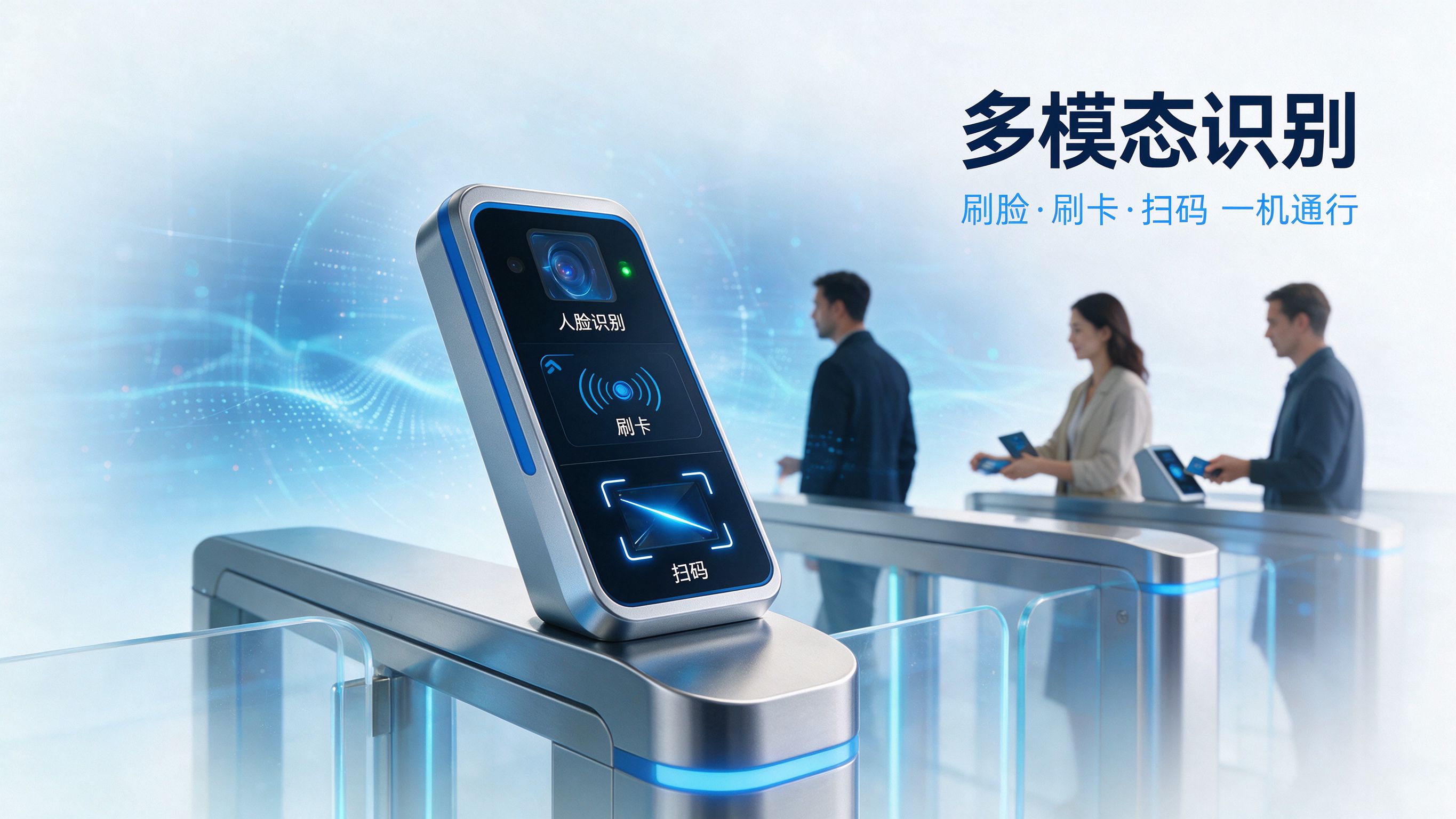
Multimodal Identity Recognition
Modern solutions support face, QR, IC/NFC and fingerprint/palm recognition combined by scenario. Face recognition is contactless and fast with liveness detection against spoofing; QR access uses dynamic phone codes for temporary authorization; IC/NFC is mature, stable and compatible with legacy systems. Use face/QR for throughput in normal times and add card or biometric second-factor verification in key areas — different combinations for different scenes, balancing efficiency and security.
Smart Passage Channels
At peak hours, recognition speed and lane throughput directly determine the passage experience. CoolCode terminals recognize in milliseconds with a large reading window, so employees pass without stopping; devices support offline continuation and local permission caching. Turnstile arrays are designed by peak flow with parallel lanes to ease rush-hour congestion.
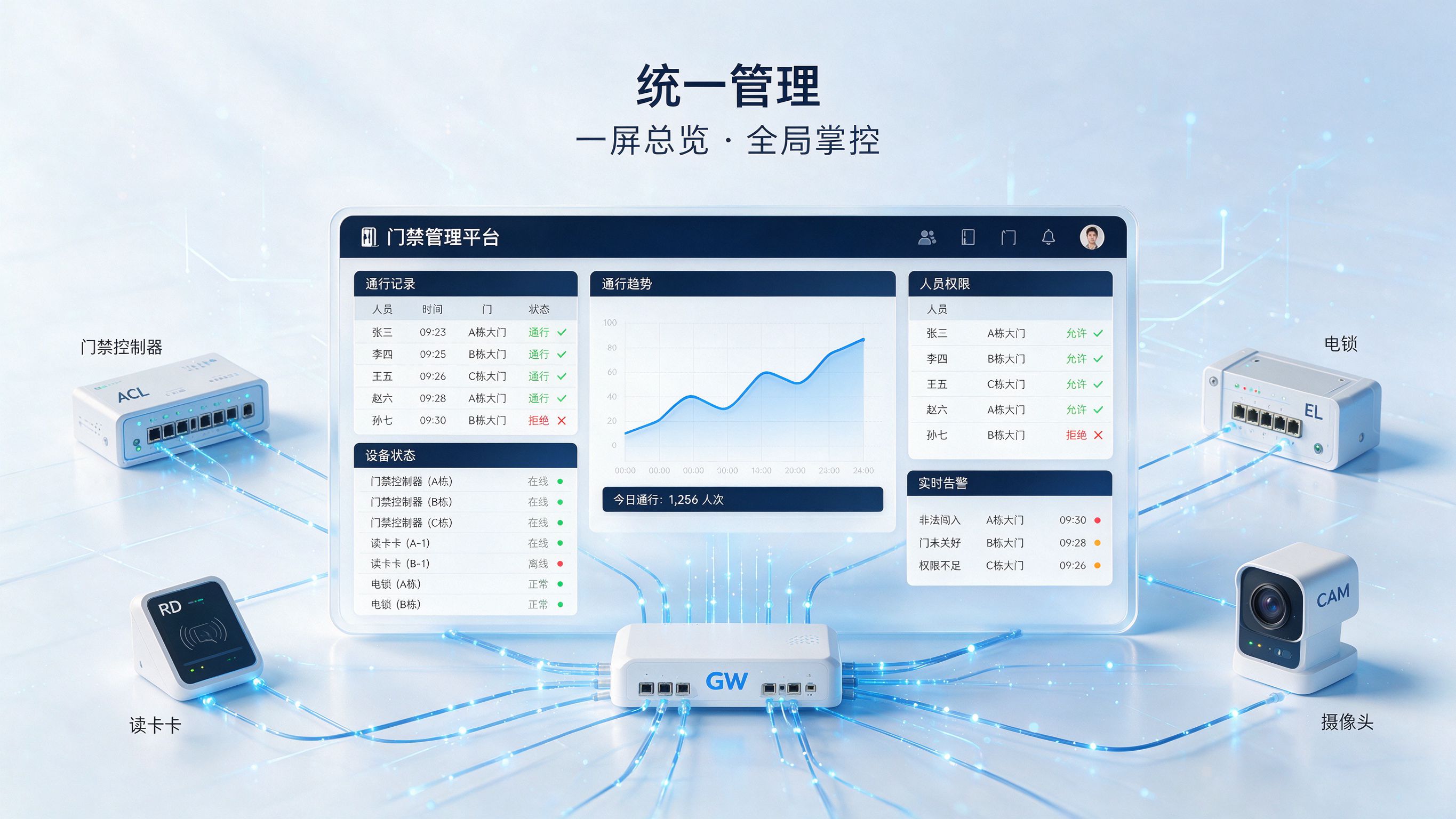
Unified Management Platform
The access platform centrally handles permission configuration, real-time monitoring, reporting and remote O&M: admins view each point's status, personnel flow and live footage on one screen with instant anomaly alerts; permissions are fine-grained by person, zone and time window, and can be pushed, opened and upgraded remotely. Multiple sites and projects are managed under unified policies.
FAQ
How much does an access control solution typically cost?
It depends on scale and modalities: a small-office face terminal starts at the low thousands of RMB; a mid-size campus with dual lanes plus a cloud platform runs around tens of thousands; large sites or construction projects with custom multi-lane deployments are quoted per point and integration scope — a site survey first is recommended.
What is the accuracy and speed of face recognition access?
Mainstream devices achieve over 99% accuracy under normal lighting, with recognition in roughly 0.2–0.5 seconds. Extreme conditions like strong light or occlusion rely on liveness detection and algorithm fallbacks, so judge by real tests rather than spec sheets.
Must construction-site access control integrate with the housing ministry platform?
Yes. Regulations require real-name registration on sites, and face-attendance data must be sent to the local housing-ministry platform; confirm the device supports this integration at purchase, or acceptance may fail.
How to choose between private deployment and cloud?
Units with sensitive data or intranet/ compliance constraints should prioritize private deployment; multi-branch organizations wanting light operations can choose cloud or hybrid. CoolCode酷豆, built on machine vision, supports private deployment and large-project customization.
Can it integrate with devices beyond face, QR and card?
Yes. With the platform as a hub, access control can connect with visitor, elevator, parking and video-surveillance systems for unified passage management; the exact scope depends on the chosen platform’s openness and APIs.